Dynamic Teaching Tools
The Structure of Number
Base Blocks
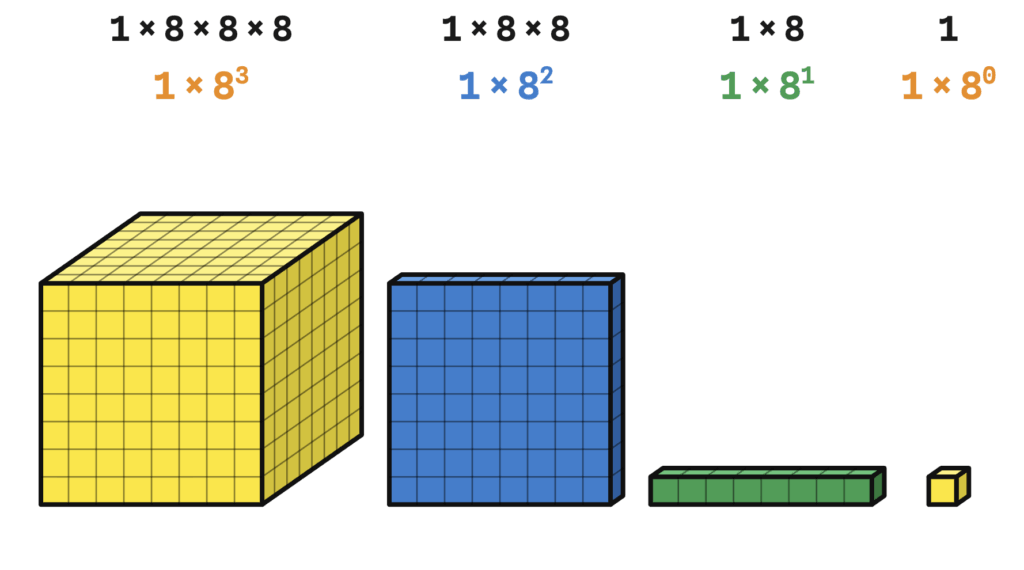
Base Blocks connect familiar representations at KS2 to KS3 and beyond. All students are familiar with the 1, 10, 100, 1000 structure of Dienes Blocks (Base 10 Blocks). The interactive representations below reveal the connections between Base 10 and Bases 2-9. This leads to generalising to Base 𝑥 as an introduction to algebraic notation.
What the research says:
Dietmar Küchemann (1978) identified the following six categories of letter usage by students:
1. Letter evaluated: the letter is assigned a numerical value from the outset, e.g. a = 1.
2. Letter not used: the letter is ignored, or acknowledged, but without given meaning, e.g. 3a taken to be 3.
3. Letter as object: shorthand for an object or treated as an object in its own right, e.g. a = apple.
4. Letter as specific unknown: specific but unknown number and can be operated on directly.
5. Letter as generalised number: seen as being able to take several values rather than just one.
6. Letter as variable: representing a range of unspecified values, and a systematic relationship is seen to exist between two sets of values.
The first three categories are all too familiar misconceptions that create a barrier to algebraic thinking and understanding. Number to Algebra looks at ways of introducing algebra by generalising the structure of number using manipulatives, dynamic representations and letters, and later as variables and specified unknowns.
Base Blocks Overview
Base Blocks Interactive Tools
Open up in full screen and move the slider or press play to change the base of the blocks. Question ideas are given below each representation. They are suggestions for questions or starters for discussions and not meant to be displayed as they are in the classroom.
3D Base Blocks
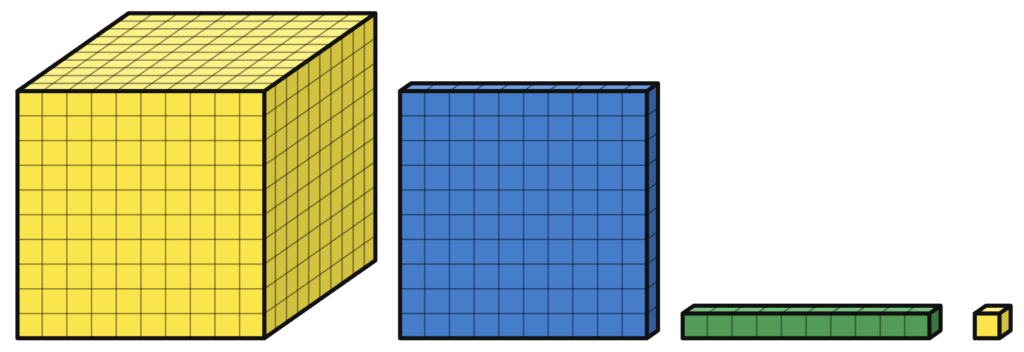
1. Base Blocks
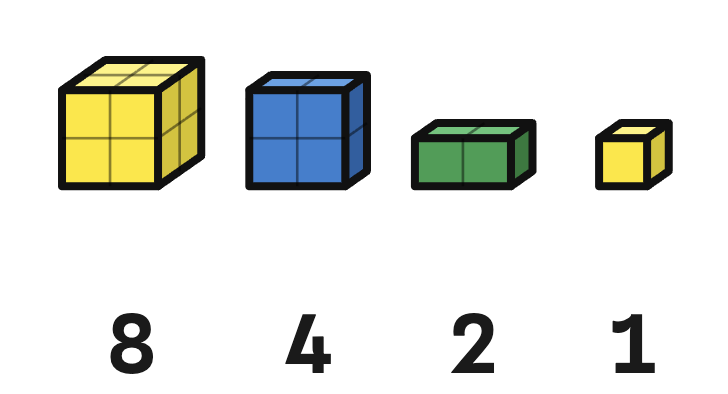
2. Squares and Cubes
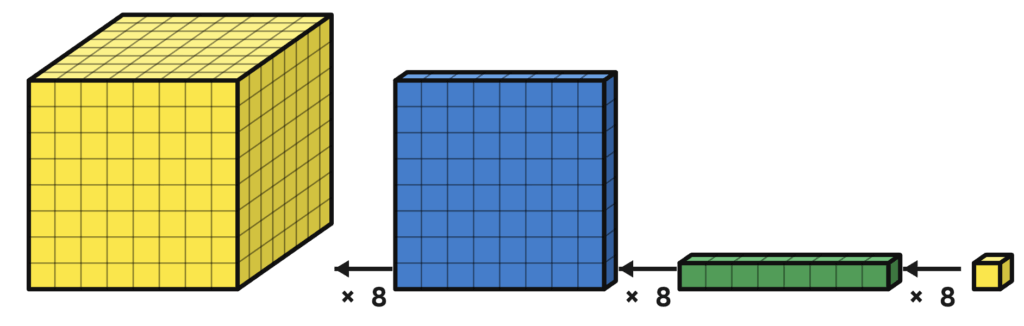
3. The Multiplier
3D ON
What do you notice? Have you seen these blocks before?
Dienes Blocks or Base 10 Blocks are commonly used in primary schools.
What is the same and what is different when I move the slider?
The shape of each block remains the same.
The 1 cm cube remains the same.
The base of the other blocks change.
3D ON Values ON Set the slider to Base 2.
What is a quick way to calculate the number of cm squares in the square or cube?
2 x 2 and 2 x 2 x 2.
3D ON Multiplier ON Press PLAY.
Ask students what they notice about the multiplier.
The multiplier is the same as the base. When you move one place left you multiply by the base.
4. Repeated Multiplication
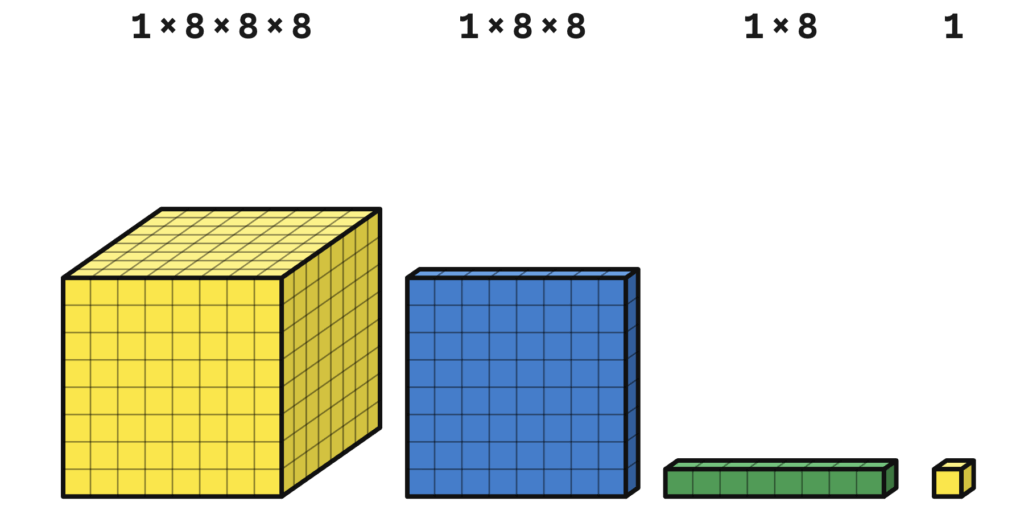
5. Index Notation
6. Base 𝑥
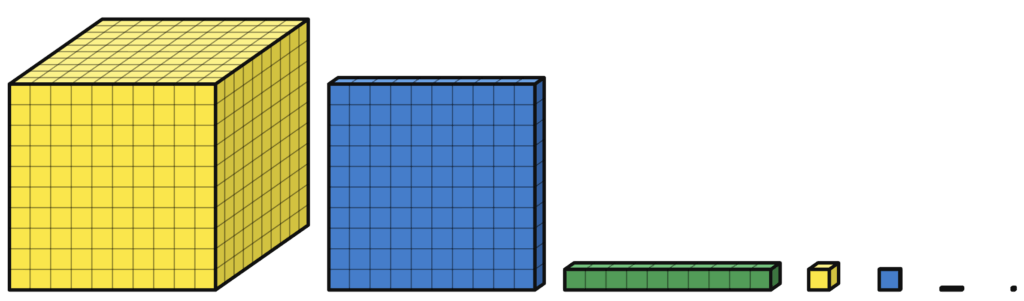
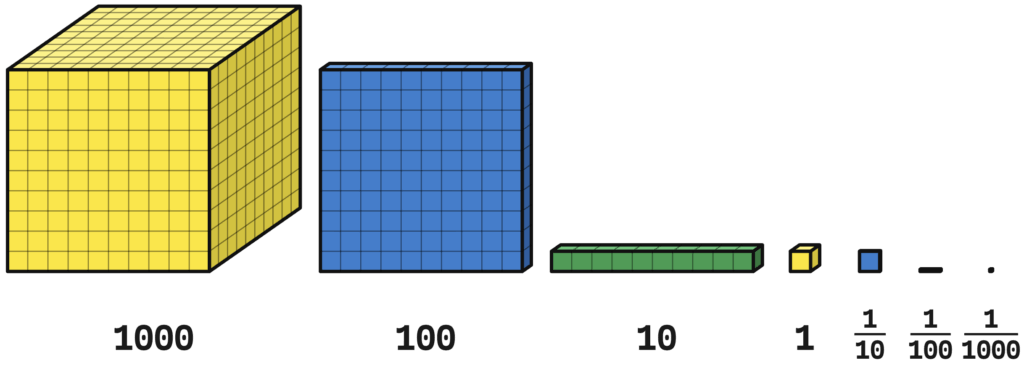
Repeated multiplication lays the foundations for a deeper conceptual understanding of negative indices below.
This structure emphasises a0 = 1. Leaving the 1 in the notation leads to standard index form.
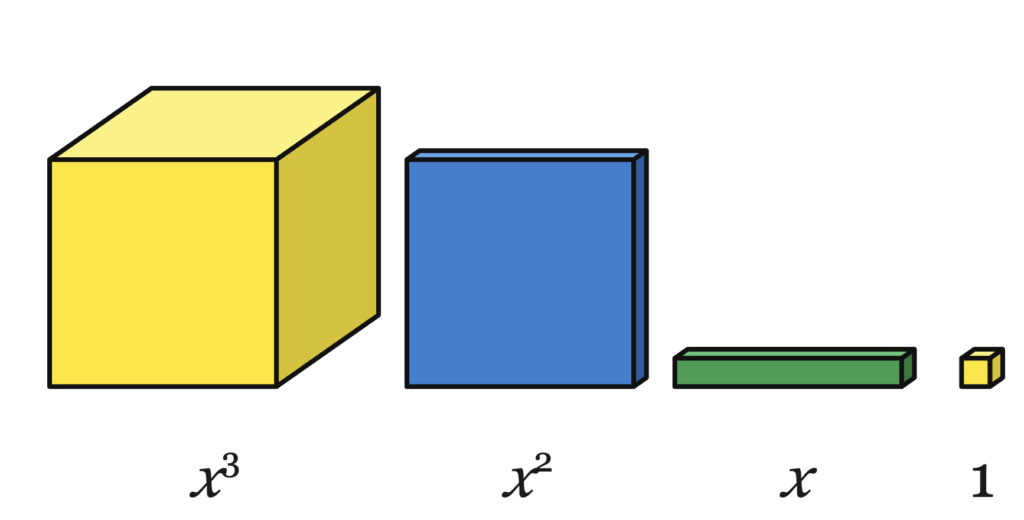
This generalisation shows the multiplicative and place value connections between 1, 𝑥, 𝑥2 and 𝑥3.
The dynamic representation allows the students to see 𝑥 as a variable and 1 as a constant. 1D and 2D versions are available on the toggles. They are essential foundations for interpreting KS3 and 4 questions involving algebraic notation, area and perimeter.
Negative Indices
1. Base Blocks < 1
2. Fraction Notation
3. Multiplier Divider
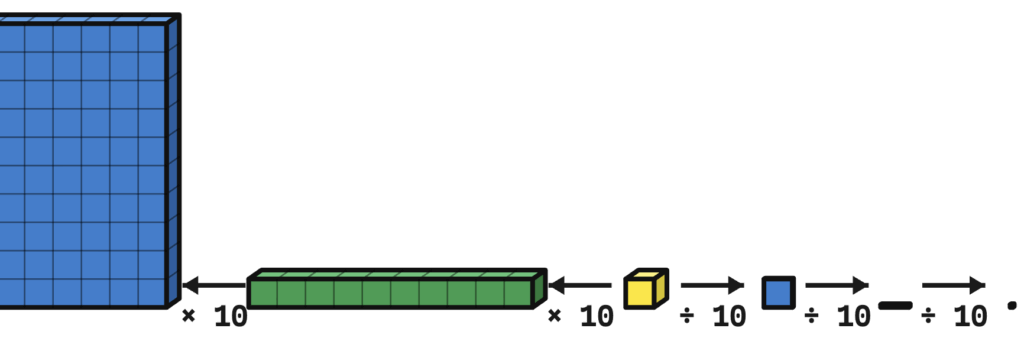
4. Repeated Division
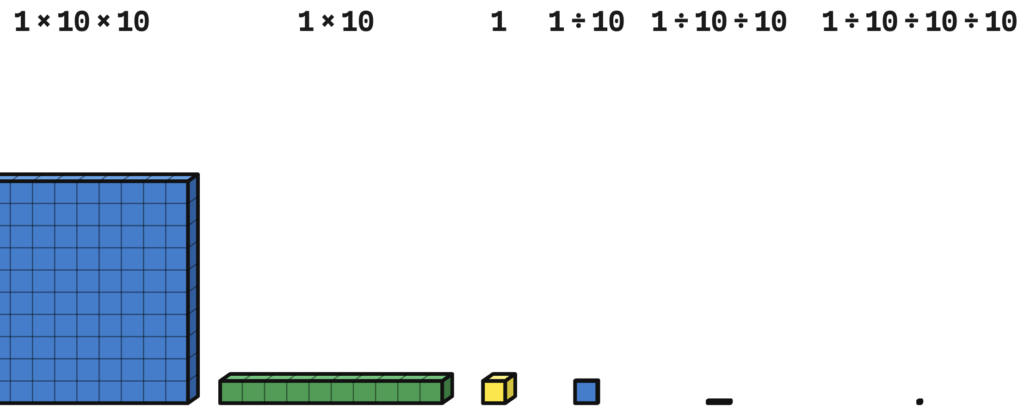
5. Index Notation
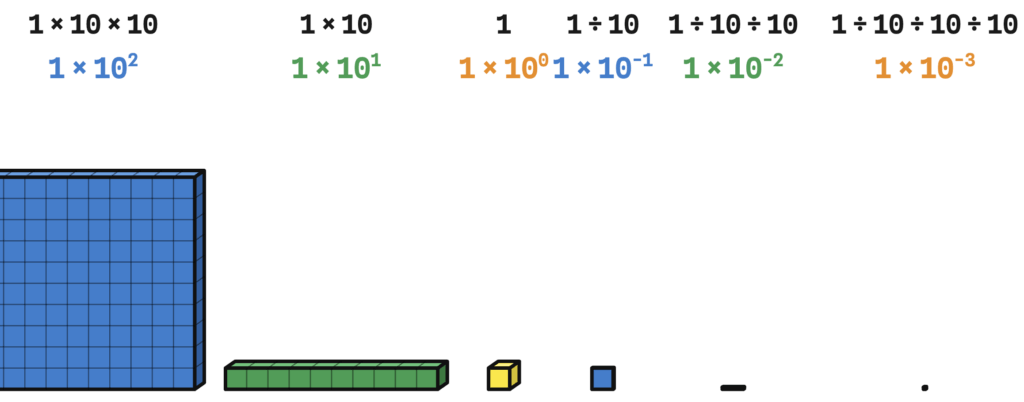
The minus sign always shows the opposite.
+5 and -5 are opposite positions on a number line or vectors in opposite directions.
3 + 2 = 5 and 5 - 2 = 3. Subtraction is the additive opposite.
3 x 2 = 6 and 6 ÷ 2 = 3. Division is the opposite of multiplication.
73 and 7-3 are multiplicative opposites. Repeated multiplication and repeated division.
Place Value Tables
Compare the place value table in Base 10 to other bases.
What would happen to the digits in the table if I multiplied the expression by 𝑥?

For added challenge and links to Computer Science try bases above base 10.
What is the value of A if the value of 1A9 is 240 in base 11?
A = 10. 121 x 1 + 10 x 11 + 1 x 9 = 240.
3D Base Blocks and Place Value Tables
1D, 2D and 3D Variables
1D representations show variables and constants as a length. This is perfect for perimeter problems at GCSE.
2D representations show variables and constants as an area. They are more commonly known as algebra tiles. They provide an area model for work on quadratic expressions and link to the grid model for multiplication.
3D representations show variables and constants as a volume.
Expand three brackets and compare with the cuboid. Switch to 2D to look at each face.
Substitution
Teacher note
Use this interactive tool to connect substitution with visual dynamic representations.